Internal Linking for SEO: Complete Guide to Rank Higher

Internal links are one of the fastest ways to improve rankings without creating new content or building new backlinks. A strong internal linking structure helps search engines understand your site, distribute authority, and push important pages higher in search results.
If you want better indexing, stronger topical authority, and higher rankings in 2026 SEO, internal linking is not optional. It is a core optimization strategy.
What Is Internal Linking in SEO?
Internal linking is the process of linking one page of a website to another page on the same website.
These links help both users and search engines navigate your site. Instead of leaving pages isolated, internal links create connections between related content.
For example, a blog post about keyword research might link to other posts about:
This creates a network of pages that search engines can crawl and understand more easily.
Internal links differ from external links because they stay within the same domain.
Types of Internal Links
Understanding the different types of internal links helps you structure your website more effectively.
1. Navigational Links
These are the links found in menus, headers, and footers. They help users access major sections of the website.
Examples include:
- Home
- Blog
- Categories
- Product pages
These links create the core structure of a website.
2. Contextual Links
Contextual links appear inside the body of content. These are the most powerful internal links for SEO because they provide context.
Example:
While reading a blog about content clusters, a contextual link may lead to a page explaining topical authority.
Search engines rely heavily on contextual links to understand relationships between topics.
3. Footer Links
Footer links appear at the bottom of pages and usually link to important sections such as:
- Contact page
- Privacy policy
- Key resources
They are useful for navigation but less powerful than contextual links.
4. Sidebar Links
Many blogs use sidebars to link to:
- Popular articles
- Recent posts
- Category pages
These links help distribute authority across multiple pages.
Why Internal Linking Is Critical for SEO
Many websites focus heavily on backlinks while ignoring internal links. But internal linking plays a huge role in how search engines evaluate and rank pages.
Helps Search Engines Discover Pages
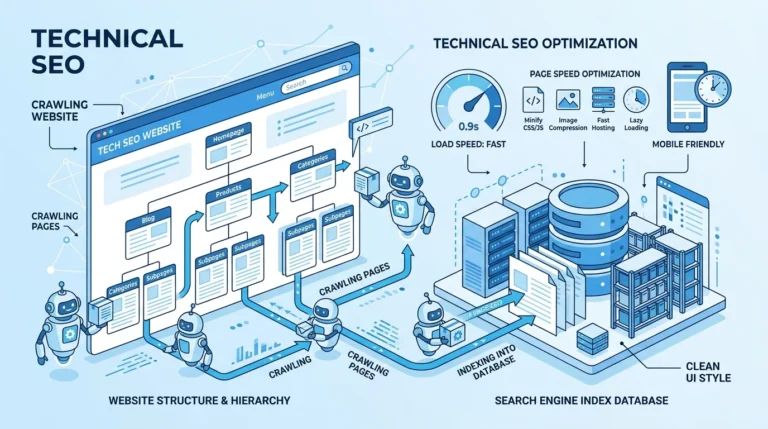
Search engine bots crawl websites through links.
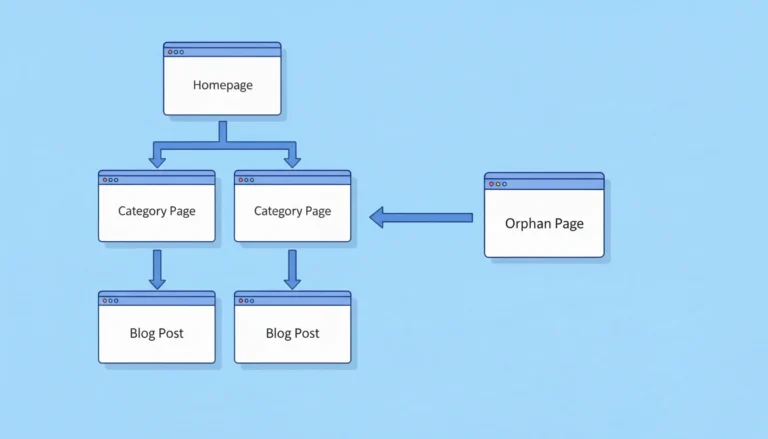
If a page has no internal links pointing to it, search engines may struggle to discover it. These pages are often called orphan pages.
Internal links ensure every important page is reachable from another page.
Distributes Link Authority
When a page receives backlinks, it gains authority.
Internal links allow that authority to flow to other pages across your site. This process is often called link equity distribution.
For example, if a high-authority blog post links to a new article, some of that authority passes to the new page.
Improves Topical Authority
Search engines increasingly rely on topic relationships rather than isolated keywords.
When multiple articles link to each other around a specific topic, search engines understand that your website has deep expertise in that subject.
This is how topical authority is built.
Improves User Experience
Internal links guide readers to additional helpful resources.
Instead of leaving the website after finishing an article, users can continue exploring related topics.
This increases:
- Time on site
- Page views
- Engagement
User signals like these indirectly help SEO performance.
Helps Prioritize Important Pages
Internal links signal which pages are important.
If a page receives many internal links from relevant articles, search engines assume it has higher value.
This is one of the easiest ways to boost important pages without new backlinks.
How Internal Linking Works in Modern SEO
Search engines use internal links to understand three major things:
- Page relationships
- Content hierarchy
- Authority distribution
When your internal linking structure is clear, search engines can interpret your site much more efficiently.
Site Structure and Hierarchy
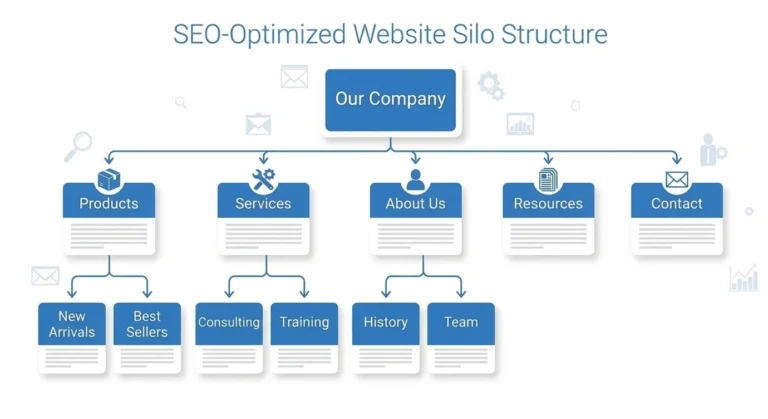
A strong internal linking structure follows a logical hierarchy.
Example structure:
Homepage
–Category page
–Subtopic page
–Blog article
This creates a clear structure that helps search engines understand how topics relate.
Topic Clusters
Topic clusters are one of the most effective internal linking frameworks.
A pillar page covers a broad topic.
Multiple cluster articles cover subtopics.
Each cluster article links to the pillar page and also links to related clusters.
Example:
Pillar page: SEO Guide
Cluster articles:
- Keyword research
- On-page SEO
- Technical SEO
- Internal linking
- Backlink building
This structure strengthens topical authority.
Link Relevance
Not all internal links are equal.
Links are more valuable when they connect closely related topics.
Example:
A page about keyword research linking to SEO tools makes sense.
But linking to an unrelated topic weakens topical signals.
Relevance is critical.
Best Practices for Internal Linking
Implementing internal linking strategically can significantly improve search performance.
Use Descriptive Anchor Text
Anchor text is the clickable text of a link.
Instead of using generic anchors like:
- click here
- read more
Use descriptive phrases such as:
- keyword research guide
- technical SEO checklist
- content cluster strategy
This helps search engines understand the linked page.
Link to Important Pages Frequently
Pages that drive conversions or traffic should receive more internal links.
Examples include:
- pillar content
- product pages
- cornerstone guides
The more relevant internal links a page receives, the stronger its authority.
Maintain Logical Link Depth
Important pages should not be buried too deep within a site.
Ideally, key pages should be reachable within three clicks from the homepage.
Deep pages often struggle to get crawled and indexed.
Add Links Naturally in Content
Internal links should appear naturally within the content.
Avoid forcing links just to increase the number of links.
Instead, add links when they genuinely help readers learn more about a related topic.
Update Old Content With New Links
One of the easiest internal linking strategies is updating older articles.
When publishing new content, revisit existing articles and add links to the new page.
This immediately improves discoverability and authority flow.
Avoid Excessive Links
Adding too many internal links can dilute their value.
Focus on quality and relevance rather than quantity.
A typical blog article may include 5–15 internal links, depending on its length.
Internal Linking Strategies That Work in 2026
Search engines have become much more advanced in understanding content relationships.
Modern internal linking strategies focus on topical relevance and semantic connections.
Pillar and Cluster Model
This model remains one of the most effective SEO frameworks.
A single pillar page acts as the main resource for a topic. Supporting articles link back to it.
This creates a strong topic hub.
Content Hub Strategy
Content hubs group multiple related articles together around a central theme.
Instead of random linking, all pages reinforce a specific topic.
This signals strong expertise to search engines.
Contextual Authority Links
High-performing pages should link to newer or lower-authority pages.
This transfers authority and helps those pages rank faster.
For example, a page with strong backlinks can pass value to several new articles.
Strategic Link Placement
Links placed higher in content often carry more weight.
Early contextual links are more likely to be crawled and clicked.
Place at least one internal link within the first few paragraphs when relevant.
Common Internal Linking Mistakes
Many websites fail to get results from internal linking because of common mistakes.
Orphan Pages
Pages without internal links are difficult for search engines to discover.
Every important page should receive at least one internal link.
Overusing Exact Match Anchors
Using the exact same keyword anchor repeatedly can look manipulative.
Vary anchor text naturally.
Example variations:
- internal linking strategy
- guide to internal links
- website linking structure
Irrelevant Linking
Links should connect related topics.
Irrelevant links confuse search engines and weaken topical signals.
Broken Internal Links
Broken links harm both user experience and SEO.
Regular audits help identify and fix these issues.
Ignoring Site Architecture
Random internal links cannot replace a well-organized website structure.
Categories, subcategories, and logical hierarchy remain essential.
Tools for Internal Link Analysis
Several SEO tools help analyze and improve internal linking.
Common tools include:
- Screaming Frog – identifies orphan pages and link depth
- Ahrefs – shows internal link opportunities
- Semrush – internal linking reports
- Google Search Console – internal link insights
These tools help identify pages that need more links.
Internal Linking Workflow for Content Teams
A simple workflow ensures internal linking is implemented consistently.
Step 1: Identify pillar pages for each major topic.
Step 2: Create cluster content targeting related subtopics.
Step 3: Link cluster articles to the pillar page.
Step 4: Link cluster articles to each other where relevant.
Step 5: Update older content regularly with new internal links.
This system ensures a strong topical network across the website.
Measuring Internal Linking Impact
Internal linking improvements often produce measurable SEO gains.
Key metrics to monitor include:
- Index coverage
- Organic traffic growth
- Page rankings
- Crawl depth
- Time on site
Pages receiving additional internal links often begin ranking higher within weeks.
The Future of Internal Linking
Search engines are shifting toward semantic understanding rather than keyword matching.
Internal links play a major role in providing context between topics.
As AI-driven search evolves, websites with strong internal topic networks will have a significant advantage.
Internal linking is no longer just a technical SEO task. It is a strategic method for building topical authority and guiding search engines through your content ecosystem.
Websites that treat internal linking as part of their content strategy consistently outperform those that ignore it.
Conclusion
Internal linking remains one of the most powerful yet underused SEO strategies. It improves crawlability, distributes authority, strengthens topical relevance, and enhances user experience.
When implemented strategically, internal linking transforms individual articles into a connected knowledge network that search engines can easily understand.
For websites aiming to build long-term SEO authority in 2026 and beyond, a structured internal linking strategy is essential.

Senior SEO Analyst with 5+ years experience. I specialize in Local SEO, Technical SEO, and AI search visibility through AEO and GEO strategies. Everything I write is tested against real search performance, not borrowed from someone else’s playbook.