Website Architecture in SEO: How to Structure Your Site Right
Your website architecture directly affects how search engines crawl, understand, and rank your pages. Fixing your site structure can dramatically improve rankings, indexing, and user experience without publishing a single new article.
In this guide, you’ll learn exactly what website architecture in SEO means, why it matters more than ever in modern search, and practical strategies to improve it for better rankings and stronger topical authority.
What Is Website Architecture in SEO?
Website architecture refers to how pages on a website are organized, structured, and connected through internal links.
In simple terms, it is the blueprint of your website.
Think of it like a city map. If the roads are well organized, people can easily move from one place to another. But if the roads are confusing or disconnected, navigation becomes difficult.
The same applies to websites.
Search engines use links and structure to understand:
- Which pages are most important
- How topics relate to each other
- How easily pages can be discovered
A well-structured site allows search engines to crawl efficiently and understand topical relationships between pages.
A poorly structured site causes indexing issues, orphan pages, and weak rankings.
Why Website Architecture Matters for SEO
Website architecture influences several core SEO factors.
1. Crawlability
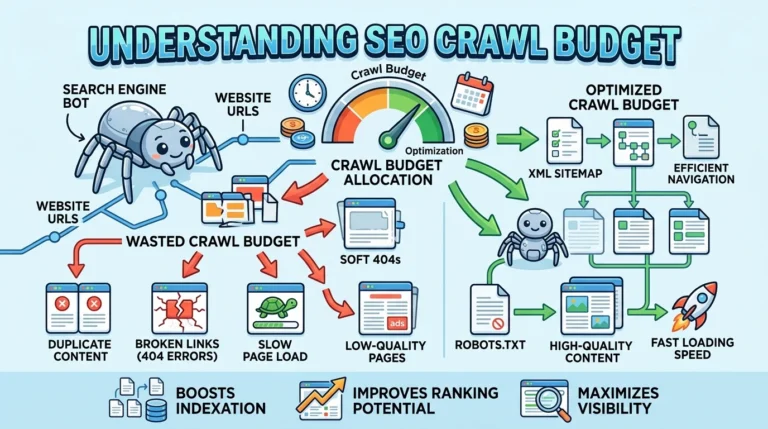
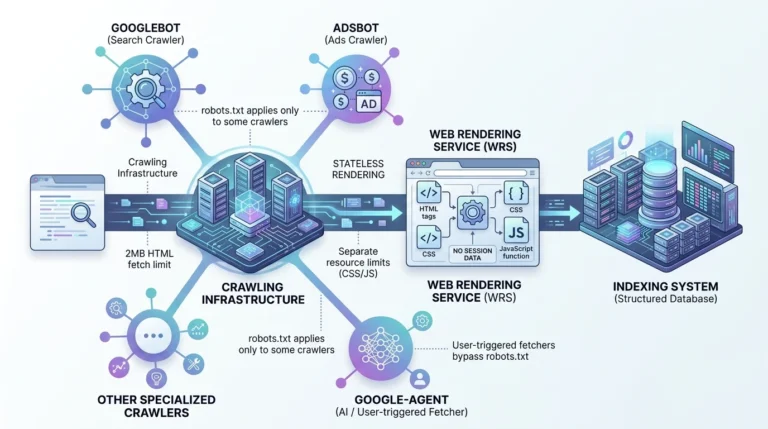
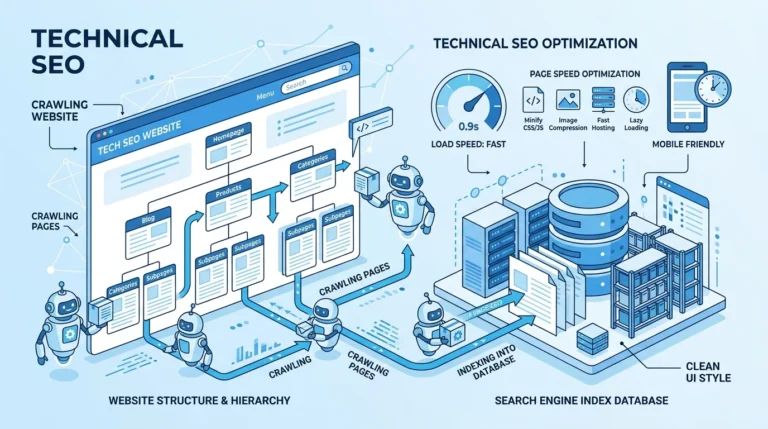
Search engines use bots to crawl websites. If your structure is messy, bots may struggle to discover deeper pages.
A clean structure ensures crawlers reach every important page.
2. Indexing
Even if a page exists, it may not get indexed if it’s buried too deep in your structure.
Good architecture ensures important pages are easy to access.
3. Link Equity Distribution
Internal links pass authority from one page to another.
A smart architecture spreads authority across related pages instead of trapping it on a few pages.
4. Topical Relevance
Search engines now evaluate websites based on topic coverage.
A structured site helps search engines understand your topical authority.
5. User Experience
Visitors should easily find what they need.
If users struggle to navigate your site, engagement drops and bounce rates increase.
Both signals negatively affect SEO.
Key Components of Strong Website Architecture
Before improving your architecture, you need to understand the building blocks.
1. Clear Hierarchical Structure
The most effective websites follow a simple hierarchy:
Homepage → Category → Subcategory → Content Page
Example structure:
Home
→ SEO Guides
→ Keyword Research Guide
→ On Page SEO Guide
→ Technical SEO Guide
This hierarchy makes topic relationships obvious.
2. Logical URL Structure
URLs should reflect your architecture.
Example:
Good structure:
/seo/keyword-research
/seo/on-page-seo
/seo/technical-seo
Bad structure:
/post?id=847392
/blog123/article-seo
Clean URLs help both users and search engines understand the page topic.
3. Internal Linking
Internal links connect related pages.
They help distribute authority and guide crawlers across your website.
Without internal links, many pages remain hidden.
4. Navigation System
Menus, sidebars, and breadcrumbs help users navigate your site.
They also signal structure to search engines.
5. Crawl Depth
Important pages should not be buried deep in the site.
A good rule: users should reach any important page within 3 clicks.
Common Website Architecture Problems
Many websites struggle with structural issues that hurt SEO performance.
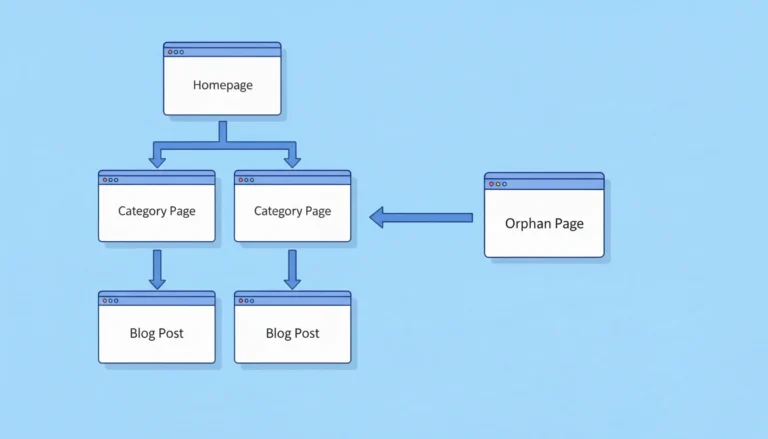
Orphan Pages
Orphan pages have no internal links pointing to them.
Search engines may never discover them.
These pages often remain unindexed.
Deep Page Structure
If a page requires five or six clicks to reach, search engines treat it as less important.
Important content should always be accessible quickly.
Random Internal Linking
Many websites link pages randomly without strategy.
This creates confusion about which pages are most important.
Duplicate Content Paths
Sometimes the same page appears under multiple URLs.
Example:
/blog/seo-guide
/resources/seo-guide
This splits authority between URLs.
Broken Navigation
Complex menus and poor navigation can hide important content.
If users cannot find pages easily, crawlers may struggle as well.
Best Practices for Website Architecture in SEO
Improving architecture does not require a full website rebuild. Small strategic changes can significantly improve performance.
1. Use the Topic Cluster Model
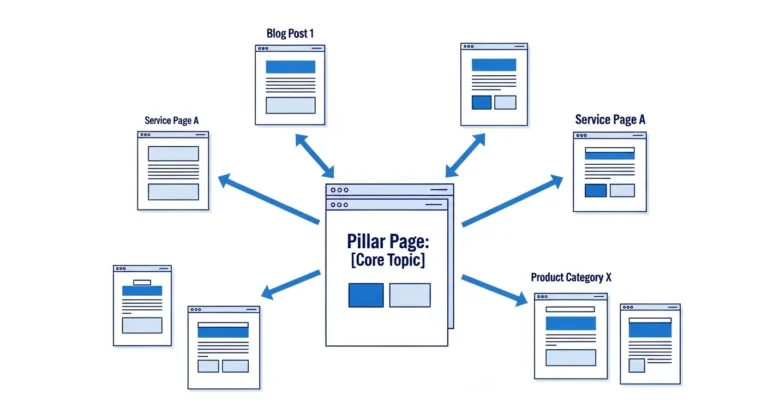
The topic cluster model organizes content around core topics.
Structure example:
Pillar Page
→ Cluster Article
→ Cluster Article
→ Cluster Article
Each cluster links back to the pillar page and related articles.
This creates a strong topical structure.
Search engines easily understand your expertise in that subject.
2. Flatten Your Site Structure
A flat structure means fewer clicks to reach important pages.
Example:
Bad structure:
Homepage → Blog → Category → Subcategory → Article
Better structure:
Homepage → Category → Article
Flattening the structure improves crawl efficiency.
3. Strengthen Internal Linking
Internal links are the backbone of architecture.
Every important page should have multiple internal links pointing to it.
Focus on linking:
- Pillar pages to clusters
- Clusters back to pillar pages
- Related articles to each other
This builds strong topical relationships.
4. Use Breadcrumb Navigation
Breadcrumbs show users where they are within the site hierarchy.
Example:
Home > SEO > Technical SEO > Website Architecture
Breadcrumbs also provide internal links that help crawlers understand structure.
5. Build Strong Category Pages
Category pages should not just list articles.
They should act as mini hub pages that explain the topic and link to related content.
This improves both user experience and SEO.
6. Fix Orphan Pages
Run a site audit to identify orphan pages.
Once found, link them from:
- Relevant articles
- Category pages
- Navigation menus
This ensures search engines can discover them.
7. Maintain Consistent URL Structure
Avoid constantly changing URLs.
If a change is necessary, use proper redirects.
Consistency helps maintain link equity and avoids confusion.
Advanced Website Architecture Strategies
Once the basics are optimized, advanced strategies can strengthen your site further.
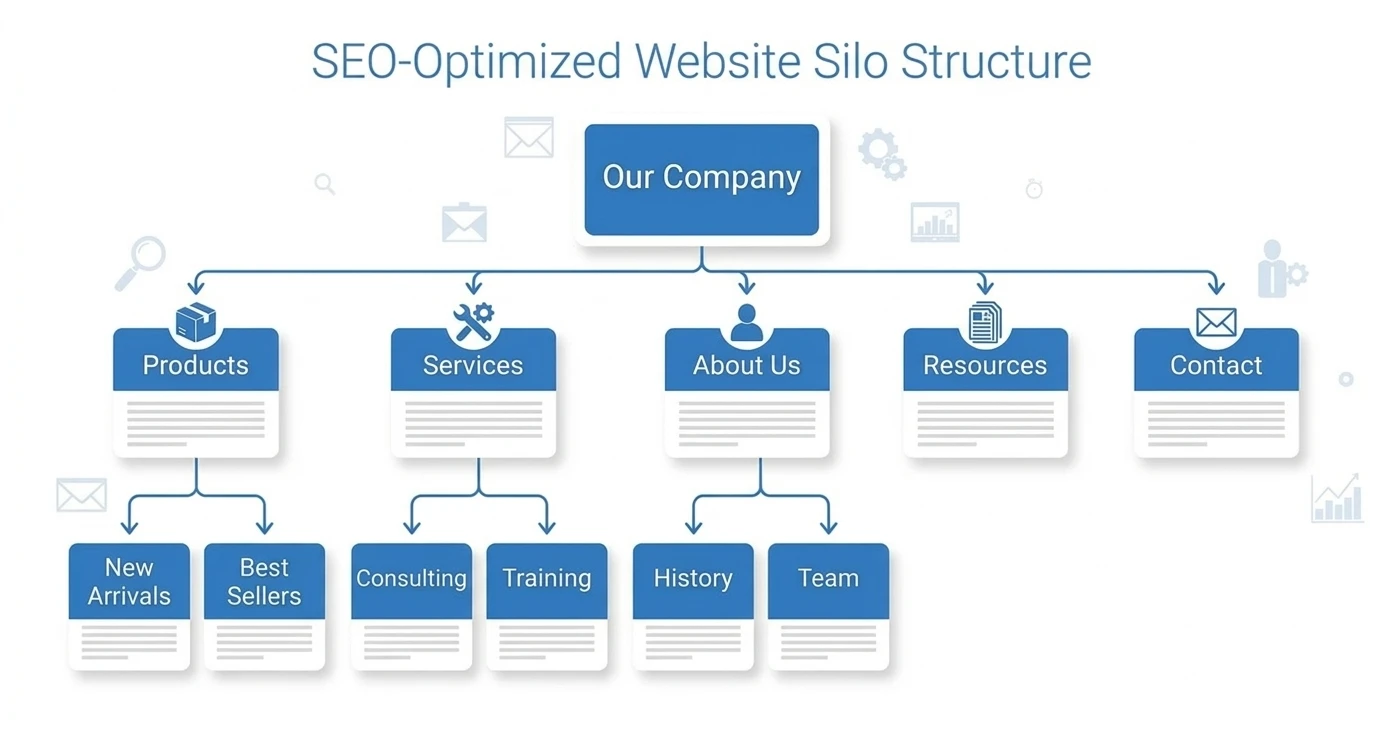
1. Silo Structure
A silo structure groups content by topic.
Example:
SEO
→ Keyword Research
→ On Page SEO
→ Technical SEO
Each section links primarily within the same topic cluster.
This reinforces topical relevance.
2. Strategic Anchor Text
Internal link anchor text helps search engines understand page topics.
Instead of generic text like:
“click here”
Use descriptive anchors like:
“technical SEO checklist”
This improves relevance signals.
3. Hub and Spoke Model
The hub-and-spoke model is similar to topic clusters.
One central hub page links to multiple supporting articles.
Supporting pages also link back to the hub.
This structure strengthens topic authority.
4. Priority Linking
Important pages should receive the most internal links.
Examples include:
- Pillar pages
- Core product pages
- Key service pages
More links signal higher importance.
How to Audit Your Website Architecture
Before improving architecture, analyze your current structure.
Step 1: Crawl Your Website
Use tools to crawl your site and generate a structure map.
This reveals:
- Broken links
- Orphan pages
- Crawl depth
Step 2: Visualize Site Structure
Look at your site like a map.
Ask:
- Are topics grouped logically?
- Are important pages buried?
- Are there unnecessary layers?
Step 3: Analyze Internal Links
Check which pages receive the most internal links.
Important pages should always have strong internal linking.
Step 4: Identify Content Clusters
Group related content under clear categories.
If articles exist without a clear topic hub, create one.
Real Example of SEO-Friendly Architecture
Let’s say you run an SEO learning website.
A good architecture would look like this:
Homepage
SEO Guides (Pillar)
–Keyword Research
–On Page SEO
–Technical SEO
–Link Building
Keyword Research
–Beginner Guide
–Keyword Tools
–Long Tail Keywords
Technical SEO
–Website Architecture
–Site Speed Optimization
–Crawl Budget
This structure clearly communicates topic relationships.
Search engines easily understand the entire content ecosystem.
How Website Architecture Supports Topical Authority
Search engines increasingly evaluate websites based on expertise within a topic.
Strong architecture helps demonstrate that expertise.
When related pages are structured together:
- Search engines see clear topic depth
- Content relevance improves
- Rankings increase across the cluster
Instead of isolated articles, your website becomes a complete knowledge hub.
Mistakes to Avoid When Improving Architecture
Even well-intentioned changes can cause problems if done incorrectly.
Overcomplicated Structure
Adding too many categories and subcategories creates confusion.
Keep your structure simple.
Excessive Internal Links
Linking every page to everything else dilutes structure.
Internal links should follow logical topic relationships.
Ignoring User Navigation
Architecture should always prioritize user experience.
If users cannot navigate easily, the structure needs improvement.
Changing URLs Without Redirects
Changing URLs without redirects causes traffic loss and broken links.
Always implement proper redirects.
The Future of Website Architecture in SEO
Search engines are becoming more sophisticated in understanding context and relationships between pages.
As search evolves, website architecture will become even more important.
Future SEO success will depend on:
- Strong topical organization
- Clear internal linking
- Logical content structures
Websites that build structured content ecosystems will dominate search results.
Final Thoughts
Website architecture is one of the most powerful yet overlooked SEO foundations.
A well-structured website improves crawlability, indexing, topical authority, and user experience simultaneously.
Instead of focusing only on publishing more content, invest time in organizing the content you already have.
When your website structure clearly communicates topic relationships, search engines reward that clarity with stronger rankings and visibility.

Senior SEO Analyst with 5+ years experience. I specialize in Local SEO, Technical SEO, and AI search visibility through AEO and GEO strategies. Everything I write is tested against real search performance, not borrowed from someone else’s playbook.