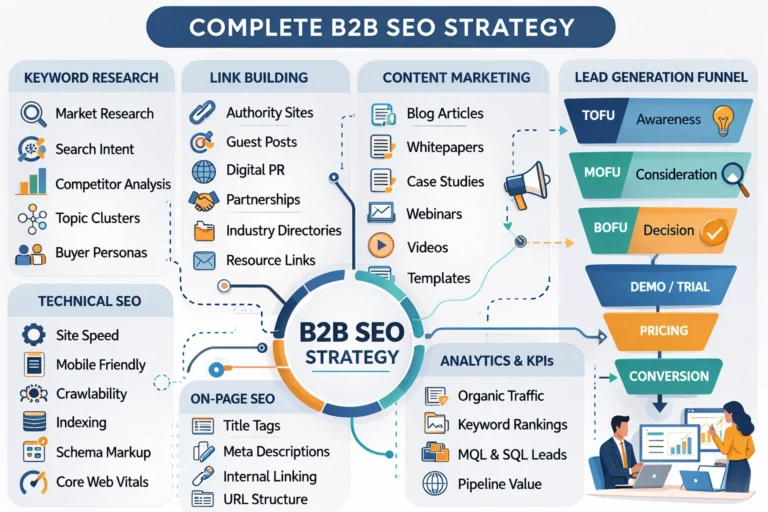
What Is SEO: A Complete Practical Guide to Search Engine Optimization and How It Actually Grows Your Website

SEO is one of the most misunderstood concepts in digital marketing.
Some people think SEO is about keywords.
Others think it’s about backlinks.
Many believe SEO is a one-time setup.
In reality, SEO is a long-term system for growing a website consistently through search engines.
When done correctly, SEO:
- Brings free, targeted traffic
- Builds trust and authority
- Grows your website month after month
- Reduces dependency on ads and social platforms
This guide explains what SEO really is, how it works in practice, and how it actually grows your website in 2026 and beyond.
No theory. No jargon overload. Just practical SEO.
What Is SEO (Search Engine Optimization)?
SEO stands for Search Engine Optimization.
At its core, SEO is the process of:
Improving your website so search engines like Google can understand it, trust it, and rank it higher for relevant searches.
When someone types a query into Google, SEO helps your website appear:
- At the right time
- For the right keyword
- In front of the right audience
SEO is not about tricking Google.
It’s about aligning your website with how search engines and users actually work.
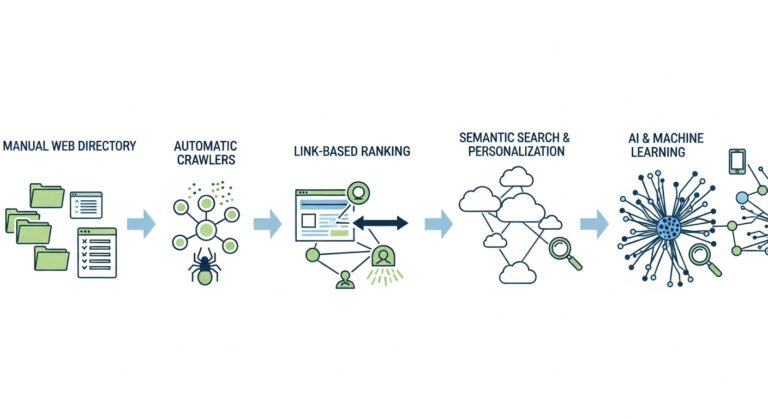
How Search Engines Actually Work (Simple Explanation)
Before learning SEO, you need to understand how search engines operate.
There are three main steps.
Crawling
Google uses bots to discover pages across the internet by following links.
If a page is hard to find or blocked, it may never appear in search results.
Indexing
Google analyzes the content of a page and stores it in its index.
If Google doesn’t understand your page clearly, it won’t rank it well.
Ranking
When a user searches something, Google selects pages from its index and ranks them based on relevance, quality, and trust.
SEO improves your chances at every stage.
Why SEO Matters for Website Growth
SEO is not just about rankings. It’s about sustainable growth.
Here’s why SEO is powerful.
SEO Brings High-Intent Traffic
People searching on Google already have a need.
They’re looking for:
- Answers
- Solutions
- Products
- Comparisons
SEO puts your website in front of users who are already interested.
SEO Compounds Over Time
A single blog post can:
- Rank for years
- Bring traffic daily
- Generate leads passively
Paid ads stop when you stop paying. SEO keeps working.
SEO Builds Trust and Authority
Users trust Google.
If your site ranks high, users assume:
- You’re credible
- You know what you’re talking about
- You’re worth listening to
That trust transfers to your brand.
The Core Pillars of SEO
SEO is built on three main pillars.
Ignoring any one of them limits growth.
1. On-Page SEO (Content and Page Optimization)
On-page SEO is everything you control on your website.
This includes content, structure, and optimization.
Keyword Research (The Foundation)
Keywords are the bridge between users and your content.
Good keyword research focuses on:
- What people are actually searching
- Search intent
- Ranking difficulty
Instead of targeting broad keywords like:
“SEO”
Target practical ones like:
“How to improve SEO for a new website”
“SEO checklist for beginners”
Long-tail keywords are easier to rank and convert better.
Search Intent Matters More Than Keywords
Ranking is not just about using keywords.
Google ranks pages that match intent.
There are four main types of intent:
- Informational (learn something)
- Navigational (find a site)
- Commercial (compare options)
- Transactional (buy something)
Your content must match the intent exactly.
A guide won’t rank for a “buy now” query.
A product page won’t rank for a “how to” query.
Content Quality Is the Ranking Differentiator
In 2026, content quality is non-negotiable.
High-quality content:
- Solves a real problem
- Goes deeper than competitors
- Is easy to read
- Feels human and practical
Low-quality content:
- Repeats what’s already ranking
- Adds no new insight
- Exists only to rank
Google rewards useful content, not long content.
On-Page Optimization Basics
Every page should include:
- One clear primary keyword
- Keyword in title and URL
- Proper headings (H1, H2, H3)
- Natural internal links
- Clear structure
Avoid keyword stuffing.
Clarity beats optimization tricks.
For detailed view on on-page SEO, go and look at our separate on-page category blogs
2. Technical SEO (Website Health and Accessibility)
Technical SEO ensures search engines can access and understand your site properly.
Even great content fails without solid technical SEO.
Website Speed
Slow websites lose rankings and users.
Optimize:
- Images
- Hosting
- Caching
- Code bloat
Speed affects rankings and conversions.
Mobile-Friendliness
Most searches happen on mobile.
Your site must:
- Load fast on mobile
- Be easy to read
- Have touch-friendly navigation
Google uses mobile-first indexing.
Indexing and Crawlability
Your pages must be crawlable and indexable.
Common problems:
- Noindex tags on important pages
- Broken internal links
- Poor site structure
Clean architecture helps Google understand your site faster.
HTTPS and Security
Secure websites are a standard requirement.
HTTPS builds trust and protects users.
3. Off-Page SEO (Authority and Trust)
Off-page SEO is how Google measures your website’s reputation.
The biggest factor here is backlinks.
What Are Backlinks?
Backlinks are links from other websites to yours.
Google sees backlinks as votes of confidence.
Not all backlinks are equal.
A few high-quality links beat hundreds of low-quality ones.
How to Earn Quality Backlinks
In 2026, backlinks are earned—not built artificially.
Effective methods:
- Publishing original research
- Creating in-depth guides
- Guest posting on relevant sites
- Building relationships
- Digital PR
Spammy link-building hurts more than it helps.
Brand Mentions and Authority Signals
Google also looks at:
- Brand searches
- Mentions without links
- Social presence
- Overall site reputation
SEO is becoming more brand-driven over time.
How SEO Actually Grows Your Website (Step by Step)
Here’s how SEO growth happens in the real world.
Step 1: You Publish Helpful Content
Content targets real problems and keywords.
Step 2: Google Tests Your Page
Your page ranks low initially.
Google observes:
- Clicks
- Engagement
- Time on page
Step 3: Rankings Improve Gradually
If users engage, rankings improve.
Step 4: Traffic Compounds
More rankings = more traffic = more trust.
This process takes time but scales naturally.
SEO Is Not Instant (And That’s a Good Thing)
SEO typically takes:
- 3–6 months for early results
- 6–12 months for strong growth
This delay filters out low-effort competition.
Once rankings stabilize, SEO becomes predictable and scalable.
SEO Best Practices for 2026
What works now:
- Topical authority
- Search intent matching
- Helpful content updates
- Brand-building
- Clean technical foundation
What no longer works:
- Keyword stuffing
- Thin content
- Spam backlinks
- Shortcuts
How Beginners Should Start SEO
If you’re starting today:
- Pick one niche
- Learn basic keyword research
- Publish helpful content consistently
- Improve older content
- Build authority slowly
SEO rewards patience and consistency.
Final Thoughts: SEO Is a Growth System, Not a Trick
SEO is not about gaming Google.
It’s about:
- Understanding users
- Creating valuable content
- Building a trustworthy website
When you focus on long-term value, SEO becomes your most powerful growth channel.
Check out our essentials SEO Guides
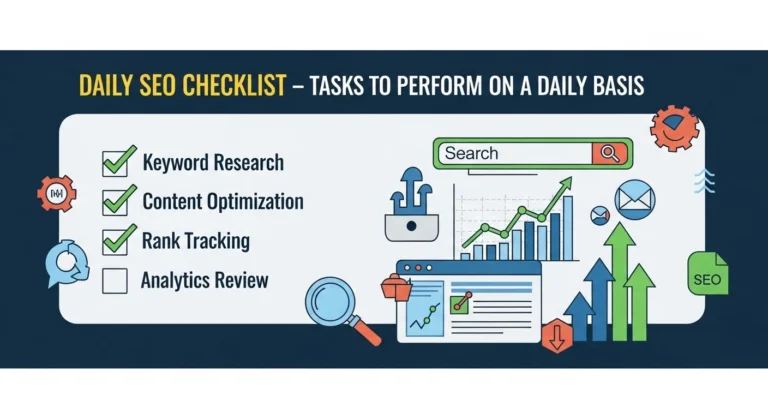
Daily SEO Check Lists
How to rank higher in google
B2B SEO Strategies
How to optimize your content based on competitors
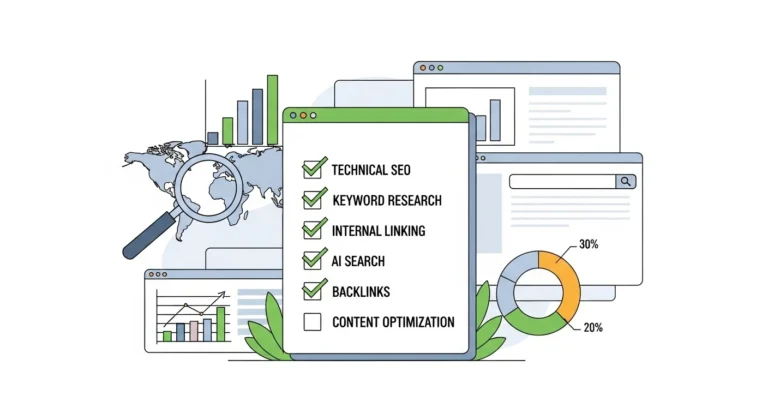
Checklist for SEO

Senior SEO Analyst with 5+ years experience. I specialize in Local SEO, Technical SEO, and AI search visibility through AEO and GEO strategies. Everything I write is tested against real search performance, not borrowed from someone else’s playbook.